
The hyrax, because it chews the cud but doesn’t have a parted hoof, is unclean to you. The hare, because it chews the cud but doesn’t have a parted hoof, is unclean to you.
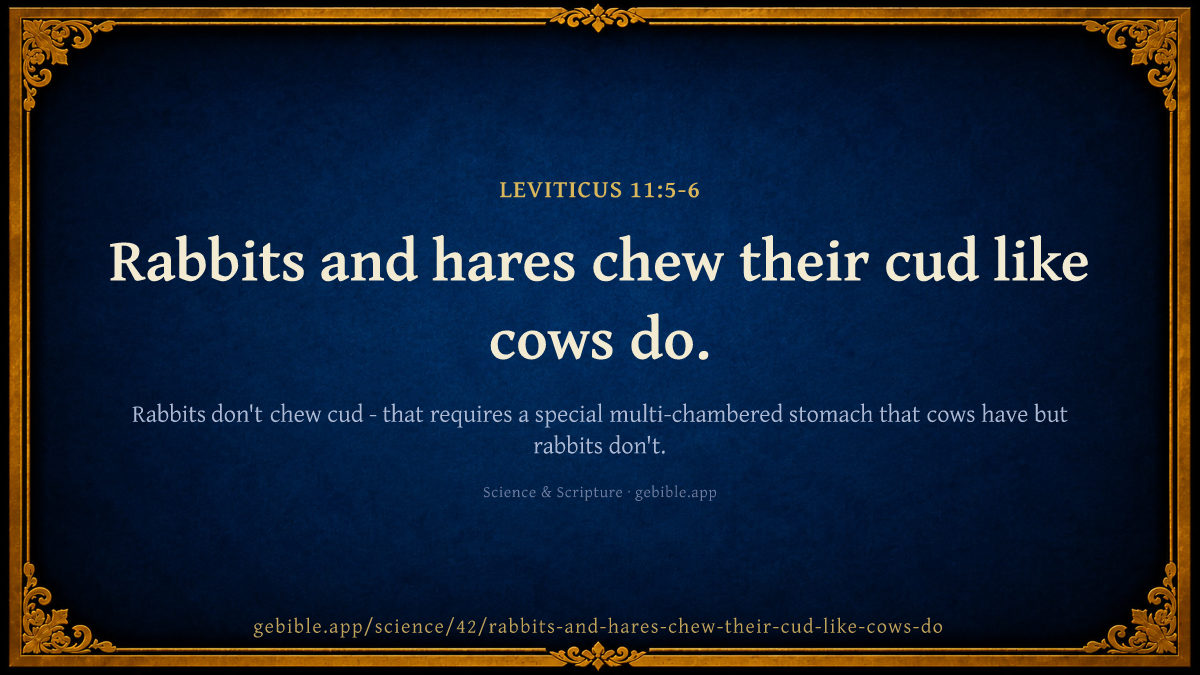
Rabbits and hares chew their cud like cows do.
Zoology
38
passages in this field
Show this passage in
The cited passage
What current science says
Rabbits don't chew cud - that requires a special multi-chambered stomach that cows have but rabbits don't. Rabbits do eat some of their droppings to get more nutrients (called cecotrophy), but that's completely different from rumination. Easy mistake if you're just watching them chew.
What the text says
Leviticus 11:5-6 calls the coney and the hare unclean because they 'chew the cud' but do not part the hoof - classing rabbits and hares among the cud-chewing ruminants.
Three honest ways to read this passage
-
As history
The text records how its authors understood the world with the knowledge they had. Read this way, a difference from modern science is a window into the ancient mind, not a failure.
-
As accommodation
The text speaks to its first audience in their own terms, to make a point that isn't mainly about physics or biology. Read this way, the scientific detail is the vehicle, not the cargo.
-
As contradiction
The text makes a claim about the physical world that modern findings dispute. Read this way, the difference is a genuine factual disagreement worth naming.
GEBible doesn't pick one of these for you. Each entry shows the passage, what it says, and what current science says — nothing more.