
There is no soundness in my flesh because of your indignation, neither is there any health in my bones because of my sin.
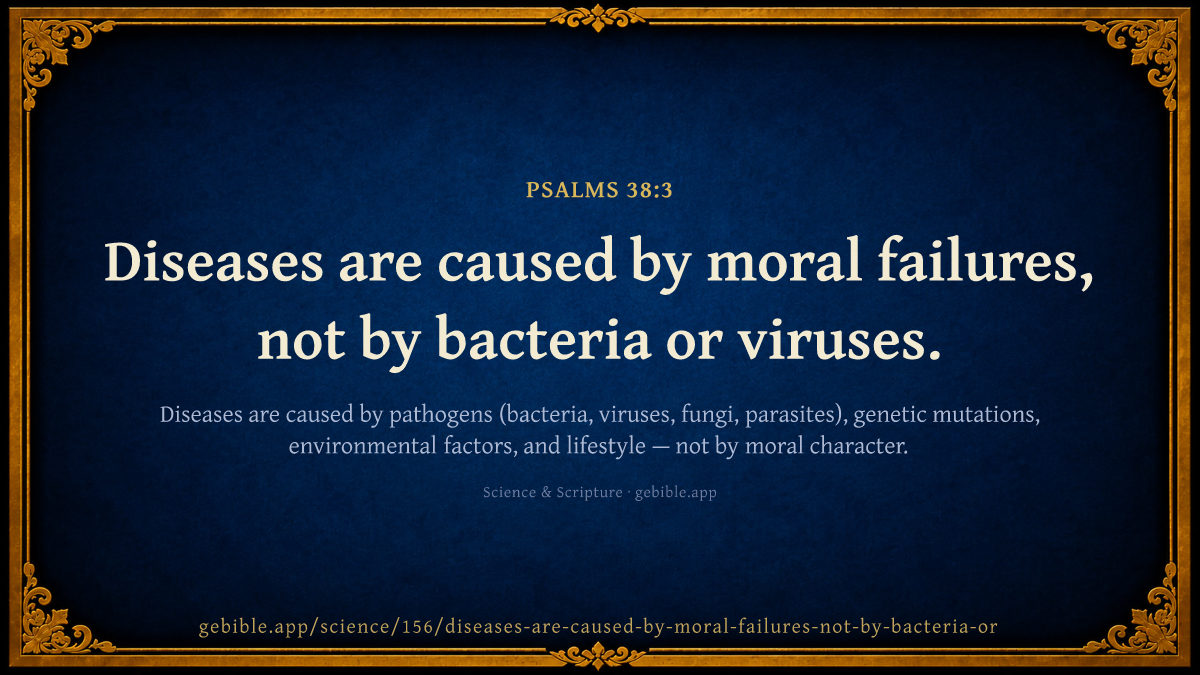
Diseases are caused by moral failures, not by bacteria or viruses.
Medicine
97
passages in this field
Show this passage in
The cited passage
What current science says
Diseases are caused by pathogens (bacteria, viruses, fungi, parasites), genetic mutations, environmental factors, and lifestyle — not by moral character. Germ theory, established by Louis Pasteur and Robert Koch in the 1860s-80s, showed that microorganisms cause infectious disease. Before germ theory, the 'disease as punishment' model actively killed people by discouraging treatment and encouraging blame. Babies get cancer. Lifelong smokers sometimes live to 100. Your immune system doesn't check your moral record before deciding whether to fight off the flu.
What the text says
This comes from Psalms 38:3. 'There is no soundness in my flesh because of thine anger; neither is there any rest in my bones because of my sin' — the text directly attributes disease to divine punishment for sin.
Three honest ways to read this passage
-
As history
The text records how its authors understood the world with the knowledge they had. Read this way, a difference from modern science is a window into the ancient mind, not a failure.
-
As accommodation
The text speaks to its first audience in their own terms, to make a point that isn't mainly about physics or biology. Read this way, the scientific detail is the vehicle, not the cargo.
-
As contradiction
The text makes a claim about the physical world that modern findings dispute. Read this way, the difference is a genuine factual disagreement worth naming.
GEBible doesn't pick one of these for you. Each entry shows the passage, what it says, and what current science says — nothing more.